How to Be Happy
Read one step at a time — do not skip ahead until the green Move on when line is true. Happiness is not a switch you flip; it is what your sleep, body, and relationships support over weeks. Start with the 30-second preflight. If you are safe but stuck in a low patch, run the six habits below for seven days. Anxious, lonely, or burned out? Pick a branch first — then return to the daily habits when you can.
Tips for reading this guide
- One step at a time. Read the green caption, the Why line, then the bullets.
- Move on when the green done line is true — then go to the next step.
- Seven days, not seven hours. Mood shifts slowly — track habits with checkmarks, not mood scores.
- Stuck? Ask a family member, friend, or neighbor to walk through one step with you.
- On a phone? Tap Jump to section at the top.
- Crisis or weeks of decline? See when to call for help — this list is not a substitute for care.

Things You'll Need
- Notebook or notes app for a three-line gratitude log
- Phone alarm set to the same wake time seven days a week
- Comfortable walking shoes you will actually put on
- One person you can call if a step feels impossible
- Optional: therapist or doctor contact if mood has been severe for weeks
What feels hardest right now?
Run all six habits if you can — but start with the branch that matches your main struggle, then layer the daily habits back in.
Start hereSix daily habits — run them for seven days
Four quick checks — safe to try this week?
YES to all four — then start Habit 1.
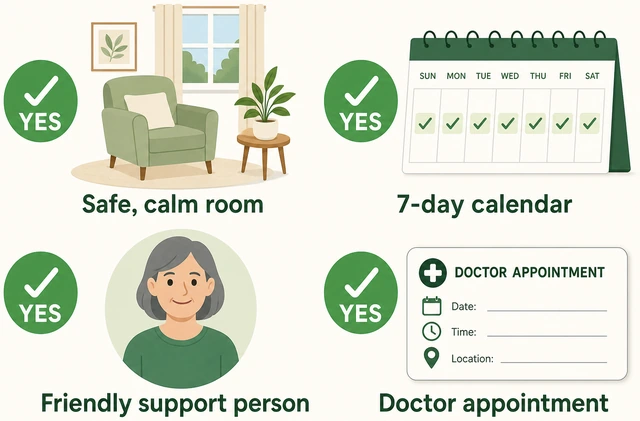
A habit plan only works when you are safe enough to try it — crisis care comes first, optimization second.
- Safe right now? If you have thoughts of self-harm — call or text 988 (US) before any habit list.
- Can commit seven days? These are small daily actions, not an instant mood fix.
- One person to call? Name a friend or family member you can text if a step stalls.
- Weeks of sleep crash or appetite change? Book a doctor visit — habits help, but they do not replace treatment.
All four checks are YES — you are safe, you have seven days, one support person named, and you know when to see a doctor.
Lock a sleep window — same wake time every day.
Pick wake time first — bedtime follows your body's rhythm.
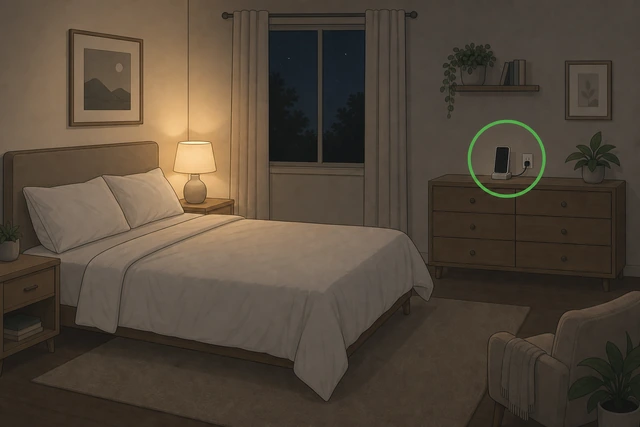
A fixed wake time anchors your circadian clock — irregular sleep is one of the strongest predictors of low mood.
- Choose a wake time you can hit on weekends too — write it on a sticky note on the alarm.
- Set your phone alarm for that time seven days a week — no snooze marathon on Saturday.
- Move the charger across the room so you cannot scroll in bed.
- Dim screens 60 minutes before bed — swap to a book, podcast, or quiet music.
- If you are still awake after 20 minutes, get up and read something dull in dim light until sleepy.
Your alarm is set, phone charges away from the bed, and you woke within 30 minutes of your chosen time today.
Racing thoughts at night? → stress branch box breathing before bed.
Move at least ten minutes — walk counts.
Ten minutes outside beats a gym membership you never use.
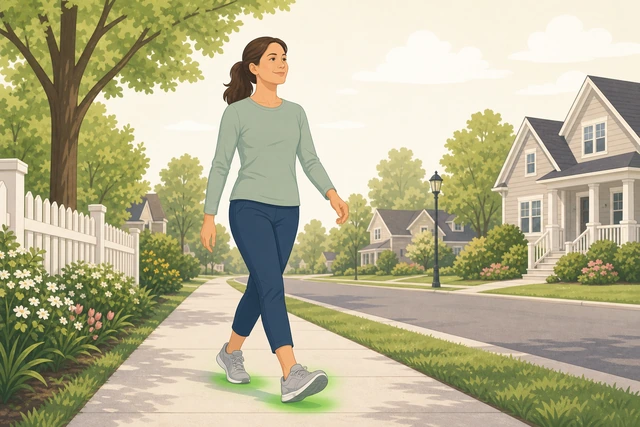
Daily movement raises baseline energy and lowers anxiety — you do not need a workout program, just repetition.
- Put walking shoes by the door tonight — friction kills the habit before it starts.
- Pick one daily cue: after morning coffee, after lunch, or right after waking.
- Walk ten minutes at a pace where you can still talk in full sentences.
- No all-or-nothing — a slow loop around the block counts on hard days.
- Mark a check on paper or your phone calendar when you finish.
You walked (or moved) at least ten minutes today and logged the checkmark.
Combine with Habit 4 — one morning loop covers movement and light.
Have one real conversation — voice or in person.
Hear a human voice — texting alone does not count for this habit.

Your social brain needs voice and presence — passive scrolling activates comparison, not connection.
- Pick one person and call them for at least five minutes — video chat counts.
- Put your phone face-down if you meet in person.
- Ask one question and listen to the full answer before sharing your own story.
- It is OK to keep it light — you are building contact rhythm, not performing deep therapy.
- Schedule the same weekday weekly so it becomes automatic.
You had at least five minutes of live voice or in-person talk today — not text-only.
No one to call? → lonely branch — start with one specific invite.
Get ten minutes of morning outdoor light.
Within two hours of waking — cloudy days still count.

Morning light tells your brain when to be alert and when to release melatonin at night — it links directly to Habit 1 sleep.
- Step outside within two hours of your wake time — porch, sidewalk, or park bench.
- Leave sunglasses off for the first ten minutes so light reaches your eyes.
- Cloudy or rainy? Outdoor shade is still brighter than indoor bulbs — the habit counts.
- Stack with Habit 2: walk your ten minutes in morning light when possible.
- Set a recurring phone reminder labeled "light" until the routine sticks.
You spent at least ten minutes outside in daylight before noon today.
Write three specific gratitudes.
Name real moments — not generic "I'm blessed" lines.
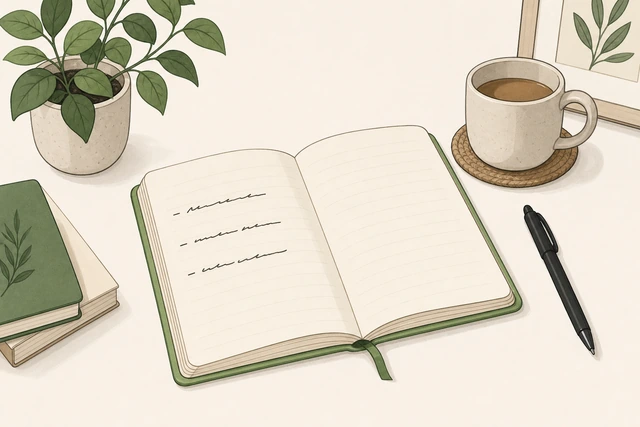
Specific gratitude trains attention toward what is real and working — vague positivity does not shift what your brain notices.
- Open your notebook or notes app at the same time daily — bedtime or morning coffee.
- Write three lines, each naming one specific thing from the last 24 hours.
- Include one sensory detail: "warm shower," "neighbor waved," "good bread smell."
- On brutal days, write small truths — "hot coffee," "bed was soft" — they still count.
- Do not re-read old entries to judge your mood — just write today's three.
Three specific gratitude lines are written for today — each names a real moment, not a category like "family."
Set one boundary this week — and keep it.
One clear no — written down — protects recovery time.
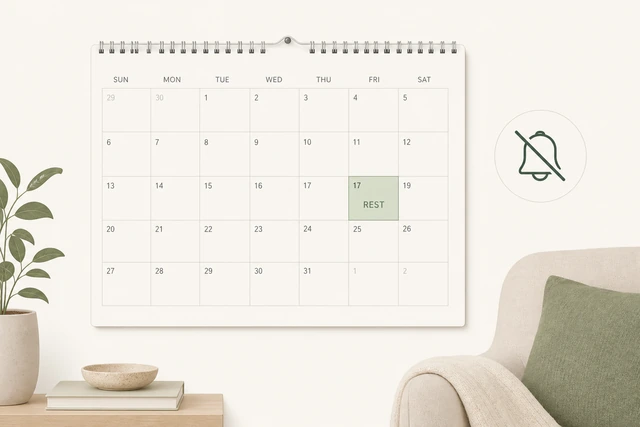
Happiness needs protected recovery — resentment from overcommitment drains the energy your other habits depend on.
- Pick one boundary: decline an optional commitment, mute work notifications after a set hour, or block one evening on your calendar.
- Write the boundary in your calendar or notes app with a start time.
- Tell one person your boundary so they can help you hold it — "I am offline after 7 pm this week."
- When guilt hits, read the boundary aloud once — then follow it anyway.
- At week's end, notice whether protected time made other habits easier.
One boundary is written, announced to one person, and you kept it at least once this week.
Running on empty? → burnout branch before stacking more habits.
If you're overwhelmed or anxiousCalm the nervous system first
Use when your body feels wired — racing heart, shallow breath, or you cannot focus long enough for the daily habits.
Box breathing — four counts in, hold, out, hold.
Hand on belly — feel it rise on the inhale.
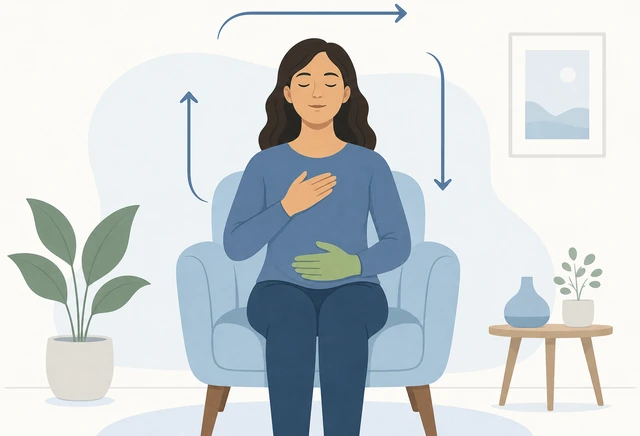
Slow exhale-heavy breathing signals safety to your nervous system — you cannot think clearly while your body thinks it is under attack.
- Sit with feet flat and one hand on your belly.
- Inhale through your nose for four counts — belly pushes your hand out.
- Hold four counts — shoulders stay relaxed, not shrugged.
- Exhale through your mouth for four counts — belly falls.
- Hold empty four counts, then repeat for five full cycles (about two minutes).
You completed five box-breathing cycles and your heart rate feels slower than when you started.
Shrink today's list to three items max.
One must-do, two nice-to-do — everything else waits.
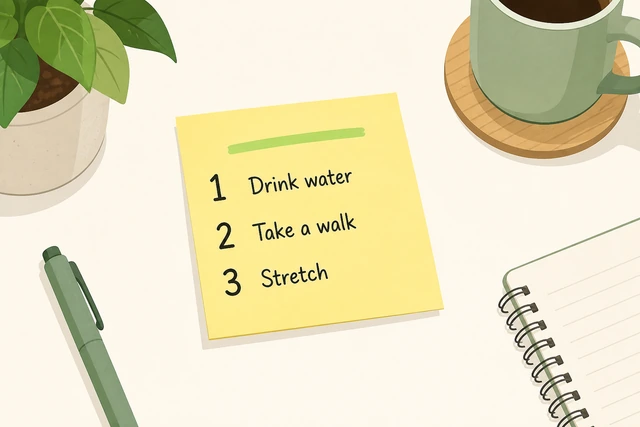
Anxiety feeds on infinite to-do lists — shrinking today to three items gives your brain a finish line it can actually reach.
- Write every task buzzing in your head onto one scrap page — get it out of your brain.
- Circle exactly one must-do that would make today a win if nothing else happened.
- Pick two nice-to-do items — small and finishable in under 30 minutes each.
- Move everything else to a "later" page — close the notebook on it.
- When the must-do is done, choose whether to touch a nice-to-do or stop for the day.
Today's sticky note shows exactly three tasks — one circled as must-do — and the rest are on a separate later page.
When the week calms, return to daily habits starting with Habit 1 sleep.
If you feel lonelyQuality contact beats follower count
Use when you are around people but still feel unseen, or you have not had a real conversation in days.
Send one specific invite — day, time, and activity.
"Free Tuesday for a 20-min walk?" beats "we should hang sometime."
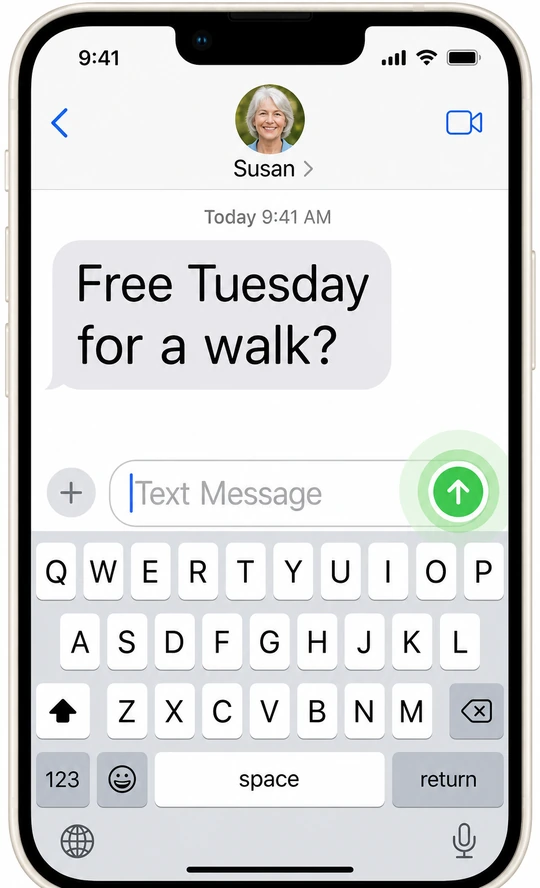
Vague invites rarely convert to real plans — specificity makes it easy for the other person to say yes or suggest an alternative.
- Pick one person you would genuinely enjoy seeing — not the most popular contact in your phone.
- Text a specific invite: day, time, activity, and duration — "Coffee walk Tuesday 4 pm, 20 minutes?"
- Send it before you talk yourself out of it — perfection is not required.
- If they say no, reply kindly and pick a second person next week — one no is not a verdict on you.
- When someone says yes, put it on your calendar immediately.
You sent one text with a named day, time, and activity — and you have a yes on the calendar or a second person queued for next week.
Join one recurring group — same time every week.
Same room, same hour, four weeks — familiarity builds friendship.

Friendship grows from repeated low-pressure exposure — showing up in the same room weekly beats a hundred one-time networking events.
- Search one recurring option: library class, run club, faith group, volunteer shift, or community garden.
- Pick a group that meets the same day and time weekly — one-off events do not build rhythm.
- Commit to four consecutive visits before you judge whether it fits.
- Sit in the same spot each time and greet one person by name.
- After week four, invite one acquaintance from the group to coffee — use the specific-invite format from Step 1.
You attended the same recurring group at least twice and greeted one person by name.
Then layer Habit 3 — weekly voice contact with someone from the group.
If you're burned outRecovery before optimization
Use when you are exhausted, cynical about work or life, and running on empty — habits feel like another chore.
Take one full day off screens and obligations.
Phone in a drawer — tell one person you are offline.

Burnout is depletion, not laziness — your nervous system needs a real off-cycle before any habit stack can stick.
- Pick a day within the next seven days and block it on your calendar as "recovery."
- Tell one person — partner, friend, or manager — that you will be unreachable except emergencies.
- Put your phone in a drawer or another room for most of the day.
- Sleep without an alarm if you can — naps count, catching up does not.
- No "productive rest" — no inbox zero, no side projects, no guilt-driven cleaning marathons.
You took one day with screens and obligations minimized — and you told at least one person you were offline.
Talk to your manager or doctor — not just push through.
List what you can drop for two weeks — workload or health, not willpower.

Structural overload needs structural fixes — willpower cannot substitute for fewer demands or medical support.
- Write three tasks or commitments you can pause for two weeks without catastrophe.
- If work is the source, schedule a 15-minute call with your manager to discuss workload — bring the list.
- If sleep will not restore you after the rest day, book a doctor visit and say "I think I'm burned out."
- Ask about medical leave, reduced hours, or therapy referral — these are valid tools.
- Restart daily habits one at a time — sleep first, then movement — not all six on day one.
You had one conversation about reducing load — with a manager, doctor, or therapist — and you know which habit to restart first.
Chest pain or fainting with burnout? See call for help — do not wait.
When to get professional support
- Daily tasks feel impossible for more than two weeks — ask someone you trust to sit with you while you call a doctor or therapist.
- Call or text 988 (US) if you have thoughts of hurting yourself.
- See a doctor or therapist if sleep, appetite, or mood swings persist despite rest and these habits.
- Burnout with chest pain, fainting, or panic attacks needs medical care — not just a day off.
When This Doesn't Work
- Thoughts of self-harm: Call or text 988 (US) or your local crisis line — not a habit list.
- Depression lasting weeks with sleep or appetite change: See a doctor — therapy and medication are evidence-based treatments.
- Unsafe home or work: Safety planning beats gratitude journals — contact local domestic violence or employee assistance services.
- Grief or major loss: Healing takes time — these habits support recovery but do not erase pain on a schedule.
Warnings
- Do not use this guide instead of professional care when you are in crisis.
- Cutting sleep to "do more self-care" backfires — Habit 1 comes before extra projects.
- Social media happiness comparisons worsen mood — limit scroll time, especially before bed.
- Forcing gratitude when you are unsafe or grieving can feel invalidating — see exceptions above.
Tips
- Stack habits: one morning loop covers Habit 2 walk + Habit 4 light in under 15 minutes.
- Track habits with checkmarks on paper — not mood scores — for the first seven days.
- Tell one friend you are running the seven-day plan — a weekly check-in text keeps you honest.
- Miss a day? Restart tomorrow with Habit 1 only — do not wait for Monday or quit the whole week.
FAQ
Can you really "learn" to be happy?
You can build conditions — sleep, connection, meaning, protected rest — that make good days more likely. It is not a guarantee, a moral score, or a promise that hard seasons will not come.
What if I miss a day?
Restart tomorrow with Habit 1 only. Missing one day does not reset the week — quitting because you missed once does.
How is this different from toxic positivity?
We name when to get professional help, when rest beats hustle, and when grief needs space. Bad days are not failures — they are data about what your body needs.
Do I need all six habits every day?
Aim for all six, but start with sleep and movement if the full list feels overwhelming. Two consistent habits beat six abandoned ones.
Comments
Questions, corrections, and what worked for you. Comments are reviewed before they appear.