How to Clean a Cast Iron Skillet
After cooking, clean your cast iron wok in five steps: rinse, scrub, dry, oil, brief heat. Read one step at a time — finish each before the next. Start with the 30-second preflight. Greasy cook, sticky pan, or rust spots? Jump to that branch instead of guessing.
Tips for reading this guide
- One step at a time. Finish each numbered step before moving on.
- Take your time. The wok can stay warm — there is no rush.
- Stuck? Ask a family member to read the next step with you.
- On a phone? Tap Jump to section at the top.
- Pan very rusty or sticky? See when to re-season or pick a branch below.
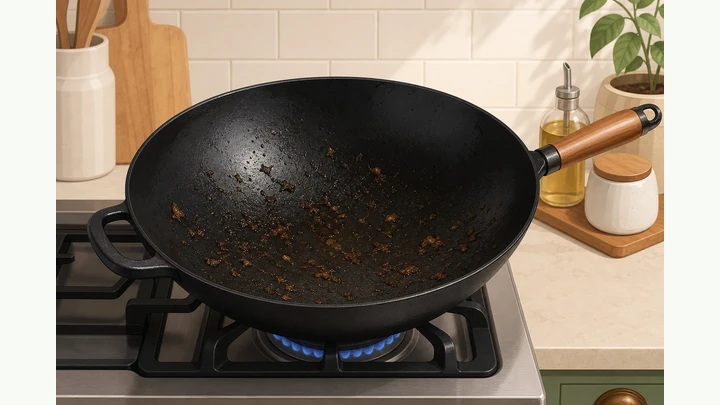
Things You'll Need
- Warm running water
- Chainmail ring scrubber or stiff nylon pan brush
- Clean cotton kitchen towels
- Neutral oil — grapeseed or canola (not olive for the coat)
- Paper towels
- Mild dish soap such as Dawn (optional — see greasy branch)
What's going on?
Normal cleanup after dinner? Start here. Branches cover grease, sticky seasoning, and rust.
First: bare cast iron or enameled?
- Bare black iron / wok — all five steps including oil (Start here).
- Enameled (colorful, smooth inside) — soap and dry only; skip oil and smoke.
- Brand-new unseasoned wok — check the factory card for wax removal first.
Start hereDaily cleanup right after cooking
30-second preflight — if any answer is NO, stop and read the branch.
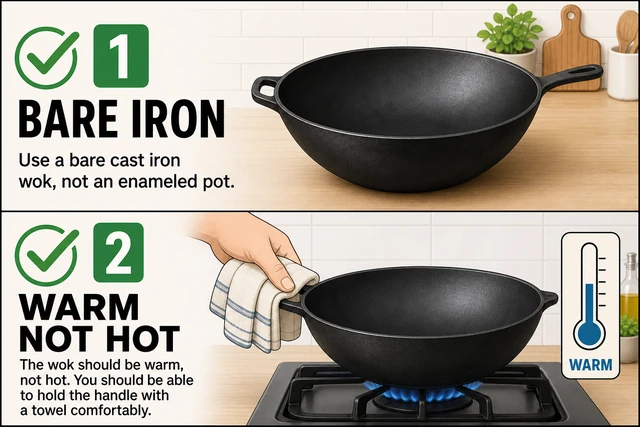
Checks 1–2: bare black iron (not enamel) · warm to touch, not red-hot.
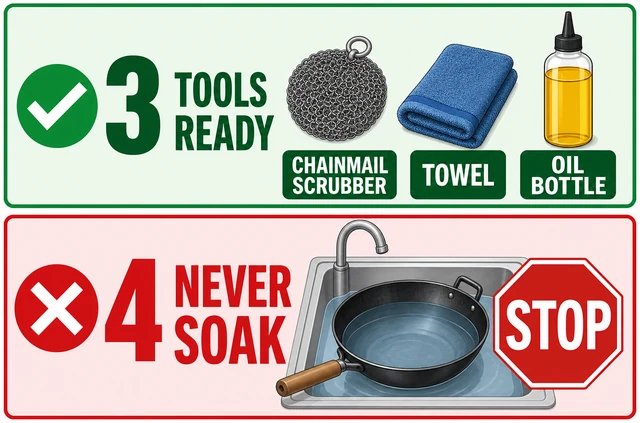
Checks 3–4: brush, towel, oil ready · never soak overnight.
Run this before you scrub. Most damage comes from soaking, steel wool on good seasoning (protective coating), or skipping the handle when drying.
- Bare cast iron? Black seasoned wok — not a colorful enamel pot.
- Warm to touch? Cool 2–3 minutes if the handle burns your hand.
- Brush, towel, oil ready? Chainmail or nylon brush — not steel wool for daily clean.
- Not soaking? Never leave the wok full of water overnight.
After bacon, fish, or deep-fry? A little soap is OK — see greasy branch. All YES? Continue to Step 1.
Rinse the wok while it's still warm.
Warm water on stuck bits — warm enough to release food, not hot enough to burn your hand.
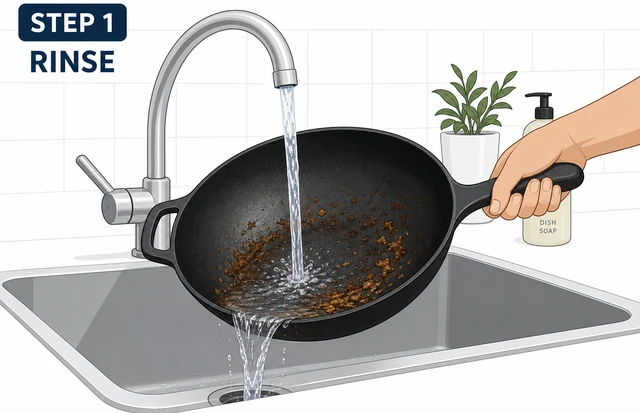
- Turn off the burner. Wait until the handle is warm, not scalding.
- Hold the wok under warm running water — tilt so water runs across the surface.
- Food still stuck hard? Go to Step 2 — a little water and low heat, then scrub.
Glass-top stove: Slide the wok off the hot coil first.
Scrub with chainmail or nylon — not steel wool.
Daily clean: chainmail (metal mesh ring) or nylon brush. Steel wool strips seasoning.
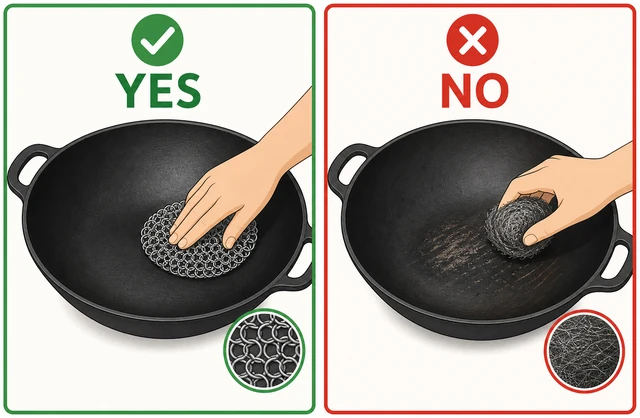
Press scrubber flat on the stuck spot — mesh on pan surface only.
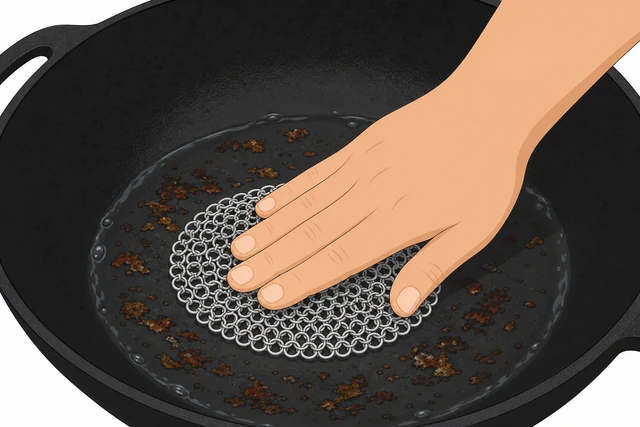
- Pick the YES tool: chainmail ring or stiff nylon brush.
- Keep a thin layer of water. Scrub in small circles on stuck areas.
- Pour out dirty water and rinse until the surface feels smooth.
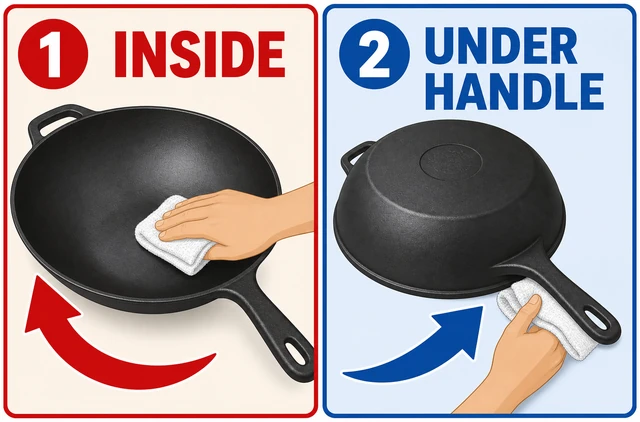
Dry all three zones on low heat.
Zones 1–2: inside surface · under the handle.
Zone 3: outer bottom — rust often starts here.
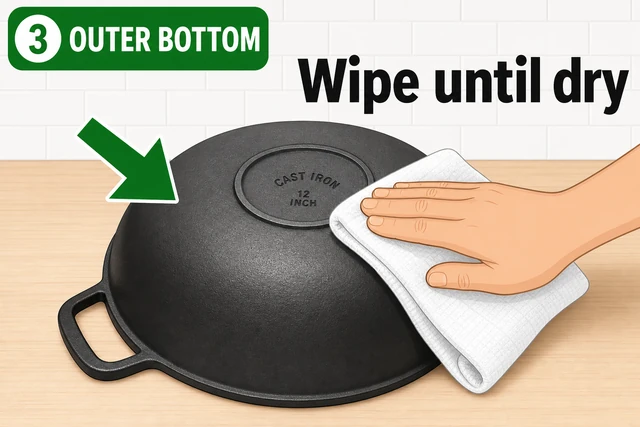
Then 1–2 minutes on LOW heat until no water beads.
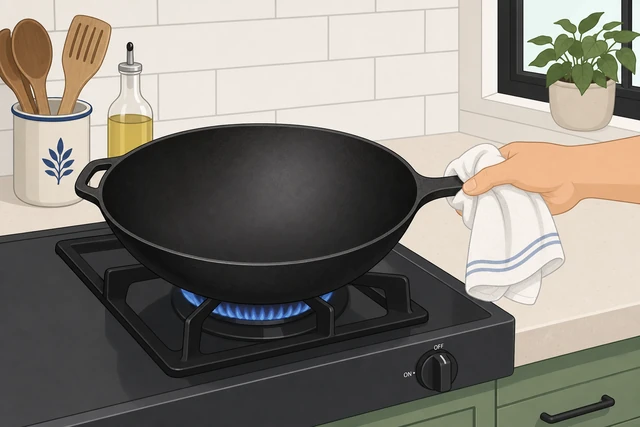
- Towel-dry inside and under the handle (first two pictures).
- Towel-dry the outer bottom (third picture).
- Set on low heat 1–2 minutes until completely dry.
Water hides under the handle — that is where rust starts.
Rub on a thin coat of oil — barely shiny.
YES = barely shiny. NO = puddle means sticky pan tomorrow.
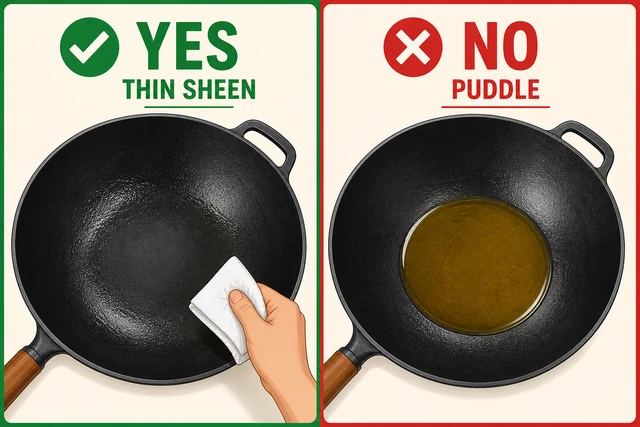
- Put 3 drops grapeseed or canola oil on a folded paper towel.
- Wipe the inside, sides, and outer bottom until barely shiny.
- See a pool of oil? Wipe again — sheen only, not wet.
Too much oil = sticky pan. See sticky branch.
Heat on low until a faint wisp of smoke.
Low flame — faint smoke means the oil set. Wipe once more and let cool.
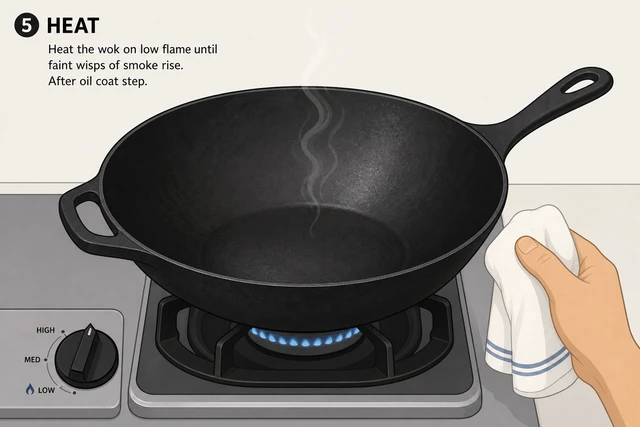
- Turn burner to LOW.
- Wait for a faint wisp of smoke — about 2–4 minutes.
- Turn off heat. Wipe with a dry towel. Let cool before storing.
If the cook was greasy (bacon, fish, deep-fry)A little soap is OK — rinse right away
Use when the pan smells like old grease and water alone is not enough.
Use a pea-size drop of mild soap — rinse right away.
Small suds on the surface only — not soaking in a sink of water.
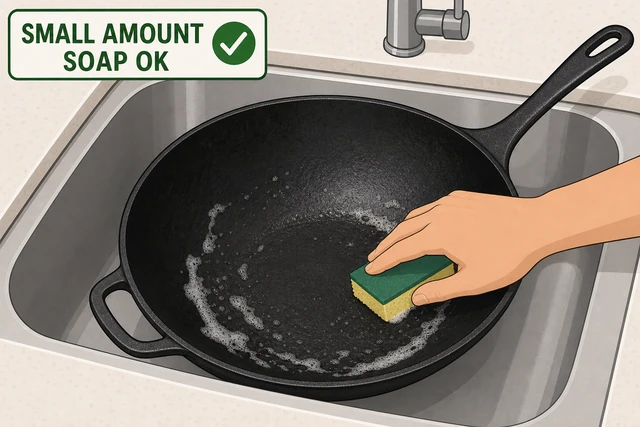
- Add a pea-size drop of mild dish soap. Scrub with your brush.
- Rinse under warm water until all suds are gone.
- Continue from Step 3 — dry all three zones on heat.
Soaking hurts the pan — a few seconds of soap does not.
If the pan feels sticky after oilingToo much oil left on — wipe and re-heat
Use when the cooking surface feels tacky or gummy the next day.
Wipe off excess until the surface feels dry-smooth.
Sticky = too much oil. Wipe until smooth, then brief low heat.
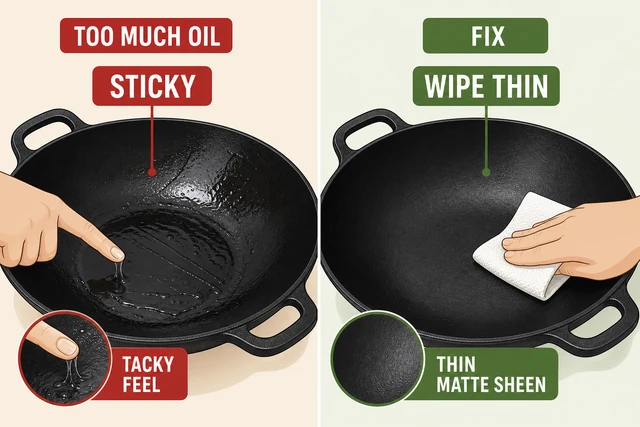
- Heat the wok on low for 2 minutes.
- Wipe hard with a paper towel until not tacky.
- Still sticky? Scrub with hot water, dry, redo Step 4 with half the oil.
If you see orange rust spotsSalt and potato scrub, then re-oil
Use when small rust patches appear after the pan was left wet.
Scrub rust with coarse salt and half a potato.
Salt + potato on the rust spot — then rinse, dry all zones, re-oil.
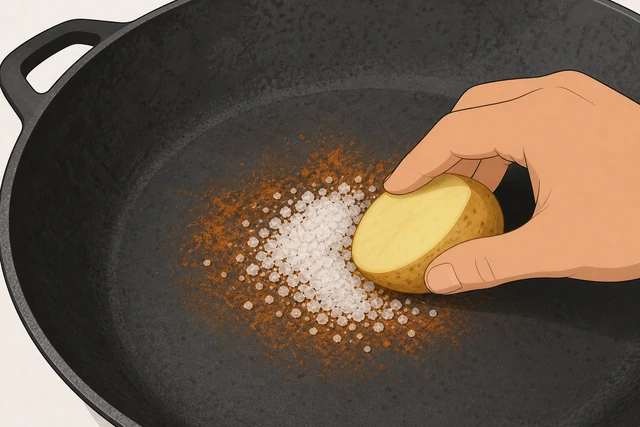
- Sprinkle coarse salt on the rust spot.
- Scrub with a cut potato half for 30–60 seconds.
- Rinse, then complete Steps 3–5 from Start here.
Rust all over the pan? See re-season.
When to ask for help or full re-season
- Ask a family member if any step feels unsafe — hot pan or heavy wok.
- Rust covers most of the cooking surface or flakes off when you scrub.
- Food sticks every time and the surface looks gray — seasoning (protective coating) may be gone.
- Pan went through the dishwasher or soaked for hours — needs full re-season.
Warnings
- Never put cast iron in the dishwasher.
- Never soak overnight — rust forms fast on bare iron.
- Never scrub good seasoning with steel wool unless removing rust.
- Enameled pots (colorful smooth inside): wash with soap and dry — skip oil and smoke steps.
FAQ
Can I use soap every time?
For everyday stir-fry, water and scrub is enough. After bacon, fish, or deep-fry, a pea-size drop of mild soap is fine — rinse right away and dry all three zones on heat.
Why does my wok rust under the handle?
Water collects under the handle. Towel the inside, under the handle, and outer bottom every time — then low heat until completely dry.
Comments
Questions, corrections, and what worked for you. Comments are reviewed before they appear.